
How to Mic a Panel Discussion: Professional AV Guide

Picture the scene: your keynote speakers are in full flight and the audience is hanging on every word, when suddenly a piercing screech of feedback rips through the ballroom. It is a moment that can derail even the most meticulously planned event, proving that learning how to mic a panel discussion effectively is about much more than just handing out wireless units. Whether you are dealing with a soft-spoken CEO or an animated guest who wanders away from their station, the technical stakes of live audio are incredibly high.
We understand that you want your panel to look as sharp as it sounds, without the clutter of messy cables or bulky stands distracting from the message. It is a common frustration to find that the live stream recording sounds muffled even when the room audio was loud, or that inconsistent volumes make the final mix feel jarring. This guide promises to solve those headaches, giving you the technical mastery to deliver crystal-clear sound that builds trust and keeps your audience engaged from start to finish.
We will walk you through the essential steps to achieve a polished, broadcast-quality experience. You will discover the best mic selections for different stage layouts, expert tips for managing feedback in real-time, and how to organise your setup for a clean, professional finish that reflects your brand's excellence.
Table of Contents
Why Audio Quality is the Make-or-Break Factor for Panel Success
Audio quality is the invisible thread that holds a panel together. When we talk about how to mic a panel discussion effectively, we aren't just talking about volume; we are talking about capturing the nuances of a live conversation without the technology getting in the way. If your audience is distracted by a buzzing speaker or a muffled voice, your message is already lost. True technical success means the microphones disappear, leaving only the ideas and the energy of the speakers to take centre stage.
Panels present unique technical hurdles that a solo keynote does not. You often have multiple open microphones on stage at once, each one a potential source of feedback or unwanted background noise. Speakers naturally turn their heads to engage with their peers, often moving off-axis from their microphones and causing frustrating volume dips. Without a professional strategy on how to mic a panel discussion effectively, these small movements can derail the listener's experience. Our goal is to create a consistent, balanced soundscape where every interjection, laugh, and insight is captured with broadcast-quality precision.
The "Cocktail Party Effect" in Event Production
The human brain is remarkable at focusing on a single voice in a crowded room, a phenomenon known as the "Cocktail Party Effect." However, this natural filter breaks down when the audio signal itself is poor. If the sound is echoing or lacks high-frequency clarity, the brain has to work overtime to decode the words, leading to significant listener fatigue. Professional av production ensures that "presence" is maintained throughout the session. This crisp, intimate quality makes the dialogue feel direct and engaging, ensuring your audience remains focused on the content rather than struggling to hear it.
Audio for the Live Stream vs. the Room
Managing a panel becomes more complex when you are mixing for two different environments simultaneously. The physical room requires enough volume to overcome ambient noise and fill the space, but your live streaming services require a completely different approach. Digital viewers need a "dry" feed that is free from the room's natural reverb and echoes. We use separate audio buses to ensure the home audience receives a clean, direct mix while the in-person crowd enjoys a balanced, feedback-free experience. This dual-focus approach removes friction for organisers and provides the peace of mind that everyone, whether in the front row or watching from a laptop, hears every word perfectly.
Selecting the Right Microphones: Lapels, Headsets, or Table Mics?
Choosing the right hardware is the first critical step in learning how to mic a panel discussion effectively. The decision often involves a trade-off between "invisibility" on camera and the technical consistency required for a flawless live mix. While aesthetics matter, your primary goal is to ensure the audio signal remains robust enough to overcome the ambient noise of a busy ballroom or conference centre. Professional engineers typically favour cardioid polar patterns for live panels, as these microphones are designed to pick up sound from the front while rejecting noise from the back, which is essential for preventing feedback from the PA system.
Lavalier Mics: The Corporate Standard
Lavalier or "lapel" microphones are the go-to choice for many corporate events because they are discreet and hands-free. They allow speakers to feel comfortable without a bulky device in their face. however, they come with challenges. They are highly susceptible to clothing rustle and can experience significant volume drops if a speaker turns their head away from the capsule. We recommend these for formal panels where a clean, uncluttered look is the top priority and the speakers are relatively stationary.
Headset Microphones: The Professional Choice
If you want the most reliable audio possible, headsets are the superior option. Modern models are incredibly discreet, available in various skin tones to minimise their visual impact. Headsets are the gold standard for high-stakes audio visual production because they ensure the microphone capsule remains at a fixed distance from the speaker's mouth, regardless of where they turn. This consistency removes the friction of fluctuating volumes and allows the audio engineer to maintain a perfect mix throughout the session.
Wireless Reliability and RF Coordination in Australia
Operating wireless systems in Australia requires a deep understanding of the local RF landscape. Professional av hire includes meticulous frequency management to navigate the crowded airwaves. With the expansion of 4G and 5G networks, the available spectrum for wireless microphones has tightened significantly. High-end digital wireless systems are essential for corporate peace of mind, as they offer better interference rejection and encrypted signals to prevent dropouts during high-stakes moments. For audience interaction, we often supplement these with "Catchbox" throwable microphones to keep the energy high and the Q&A session moving quickly.
Getting your equipment list right is the foundation of a successful event. A quick chat with our technical team can help you organise the ideal microphone package for your specific room layout and speaker requirements.
Strategic Microphone Placement and Stage Layout
Success on stage is as much about physics as it is about hardware. When you are looking at how to mic a panel discussion effectively, the physical distance between your speakers is your greatest ally or your worst enemy. We apply the 3:1 rule to every setup; the distance between any two microphones should be at least three times the distance from the speaker to their own mic. This simple calculation prevents comb filtering, that thin, hollow sound that occurs when a single voice is captured by multiple capsules at slightly different times.
Managing gain-before-feedback is the next hurdle. Your front-of-house PA system must be positioned well forward of the panel members. If your speakers are located behind the microphones, you are practically inviting a screeching loop that will ruin the atmosphere. For the panel to hear themselves, we often use discreet floor monitors or "wedges." However, these must be tuned precisely to ensure the sound doesn't bleed back into the microphones. In high-stakes environments, we might even suggest in-ear monitors (IEMs) to keep the stage completely silent and the audio mix pristine.
Positioning Lapel Mics for Maximum Clarity
Getting a lapel mic right is a three-step process that demands attention to detail. First, aim for the centre of the chest, roughly 15 to 20 centimetres from the mouth. This provides a natural, full-bodied tone without the "boomy" proximity effect of being too close. Second, secure the cables with specialised surgical or cloth tape to the inside of the clothing; this stops the distracting rustle of fabric during movement. Finally, be prepared for different attire. If a speaker is wearing a T-shirt or a dress with no lapel, we use magnetic clips or discreetly attach the transmitter to a waistband to maintain a clean visual profile.
Table Mic Setup for Stationary Panels
For panels seated at a boardroom table, "boundary mics" offer a sleek, minimalist aesthetic. These sit flat on the surface and use the table itself to reflect sound into the capsule. If you prefer goosenecks, ensure the height and angle are adjusted so the microphone captures the voice without obscuring the speaker's face on the live stream. We always utilise shock mounts for table setups. These small rubberised isolators are essential for preventing "thumping" noises from being amplified every time a panelist moves a water glass or taps the table. This level of detail is exactly how to mic a panel discussion effectively while maintaining a trip-free and clean visual environment.
Managing Multiple Speakers: The Role of the Audio Engineer
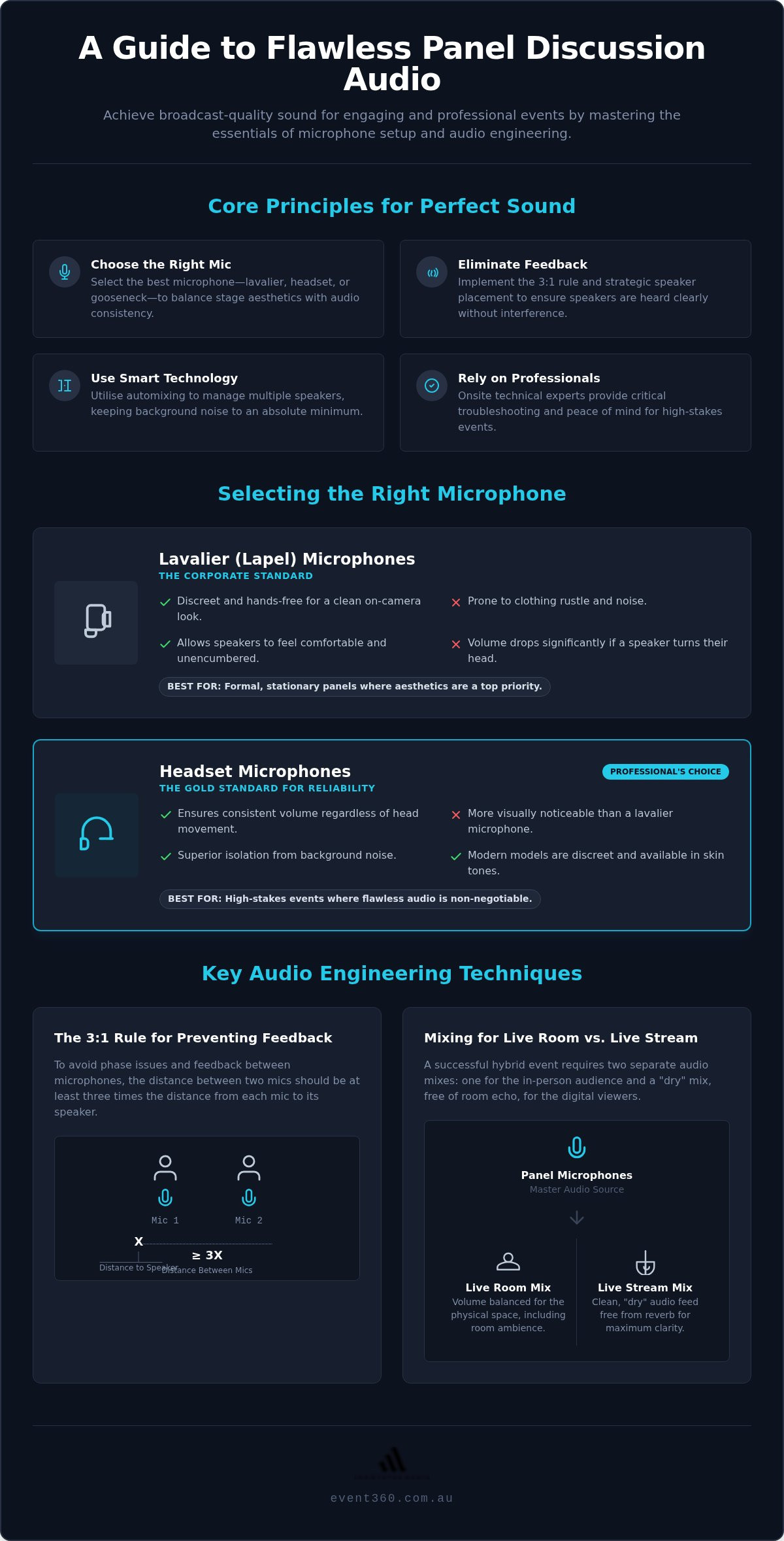
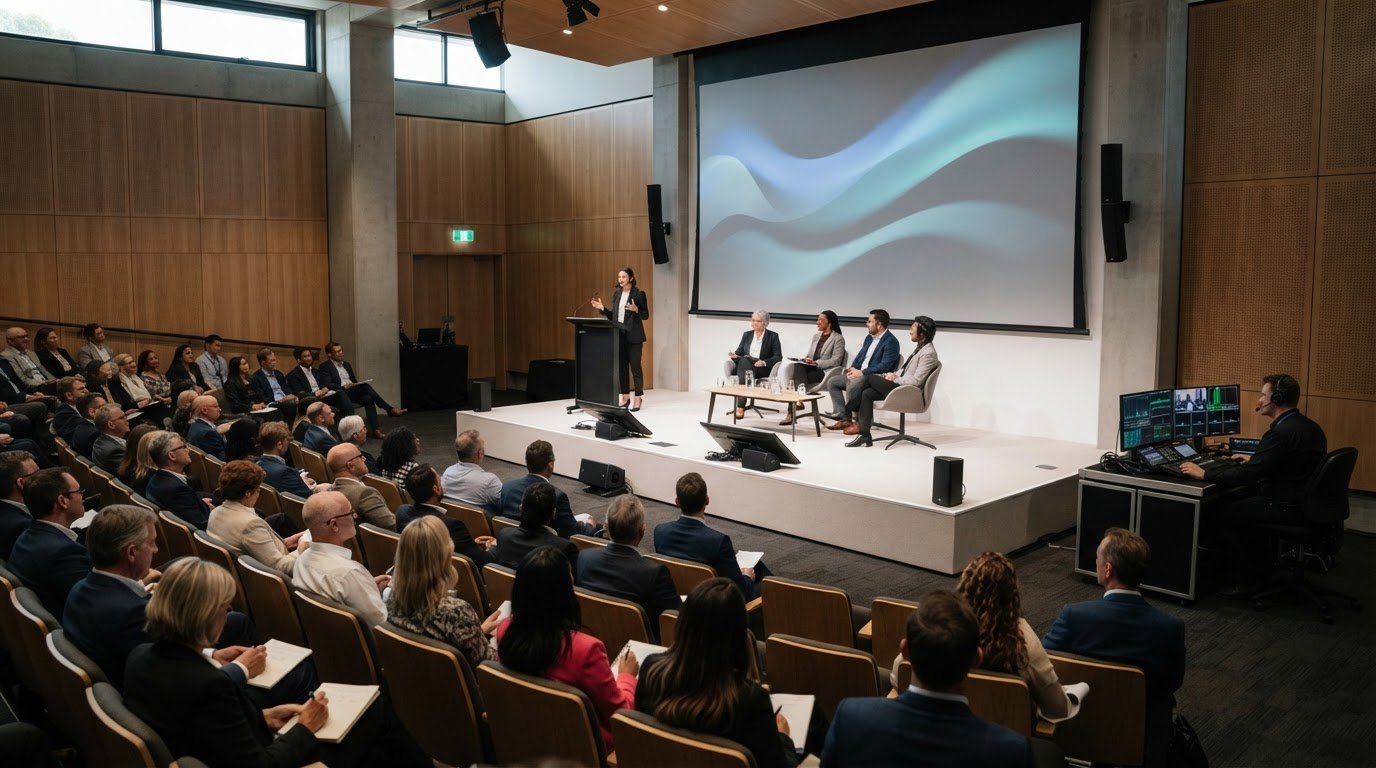
We use advanced "Automixer" technology, such as the Dan Dugan algorithm, to manage multiple active speakers in real-time. These systems automatically lower the gain on microphones that are not being used and instantly prioritise the person speaking. It creates a seamless, natural sound that feels like a high-end broadcast production rather than a clunky live PA. This technical precision, a hallmark of professional production houses like Podconnect Studio, removes the friction of manual mixing and allows the engineer to focus on the finer nuances of the soundscape.
Before the first guest walks on stage, our engineers "ring out" the room using a graphic EQ. This involves identifying the specific frequencies prone to feedback and cutting them with surgical precision. We also apply compressors to every channel. This levels out the "shouters" who get excited and the "whisperers" who lean back, ensuring a consistent volume for everyone. Professional audio visual australia partners rely on digital consoles for this level of control, allowing for instant recalls and fine-tuning that analogue systems simply cannot match.
Briefing Your Panelists on Mic Technique
Technical mastery only goes so far; the speakers need to play their part too. We always conduct a 30-second mic check with every panelist to familiarise them with the gear. We teach them to speak directly into the microphone rather than turning their head toward a slide on the screen behind them. Most importantly, we remind them never to touch or reposition their own lapel mic. These small adjustments can cause loud pops or friction noise that no amount of digital processing can fix.
Integrating audience microphones during a Q&A session is the final hurdle. Our engineers manage this transition by "ducking" the panel mics slightly when an audience member speaks, preventing a build-up of room noise. This proactive management is the hallmark of a professional production. If you want to ensure your next high-stakes corporate event is managed with this level of precision, contact our technical production team today.
Elevating Your Event with Professional Technical Production
Executing a flawless event requires more than just high-end gear; it demands a synergy between technology and talent. While understanding how to mic a panel discussion effectively is a vital starting point, the true magic happens when audio is integrated into a broader, cohesive experience. Professional av production removes the friction from your planning process by ensuring that every technical element, from the vibrant visuals on an LED wall to the pin-sharp audio of a keynote speaker, works in perfect harmony. This holistic approach transforms a standard conference into an immersive brand experience that resonates with every attendee.
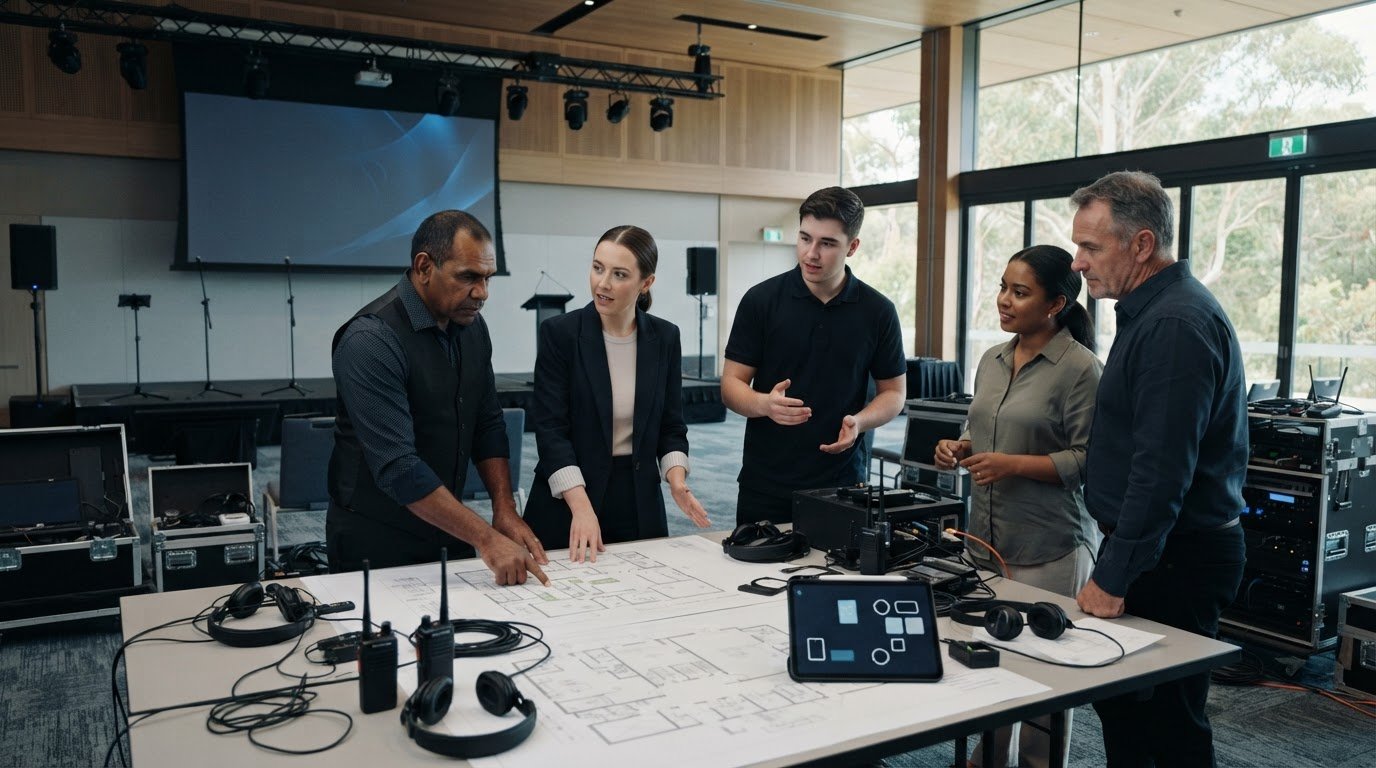
The presence of expert technical labour onsite is the ultimate insurance policy for any organiser. Live events are unpredictable, and having a dedicated team ready to troubleshoot in real-time provides a level of security that equipment hire alone cannot offer. Whether it is adjusting a frequency to avoid sudden interference or fine-tuning the lighting to suit a last-minute change in stage positions, our crew handles the Intricacies so you don't have to. Event 360 has built a reputation as the preferred partner for national corporate events by combining this technical mastery with a creative vision that brings high-stakes launches and MICE sessions to life.
The Peace of Mind of End-to-End Management
We believe in a production partnership rather than a simple transaction. Moving beyond basic equipment hire means you gain access to a dedicated project manager who ensures your technical planning aligns perfectly with your creative goals. Our team brings a "can-do" attitude to every challenge, regardless of the venue's scale or logistical complexity. We specialise in managing the intricate details of national tours and large-scale summits, providing an organised authority that keeps the energy high and the stress levels low for our clients.
Next Steps: Planning Your Next Panel
To ensure your next event is a technical triumph, we recommend starting the planning process with a few strategic steps. First, conduct a venue site visit as early as possible to assess acoustic challenges, such as high ceilings or reflective glass surfaces, which can impact how to mic a panel discussion effectively. Second, evaluate your expected audience size to determine the appropriate scale and distribution of your sound system. Finally, reach out to a specialist who understands the nuances of professional production. Contact Event 360 today to discuss a tailored AV solution that guarantees flawless audio and a polished, professional finish for your next national corporate event.
Deliver Crystal-Clear Dialogue at Your Next Event
Mastering how to mic a panel discussion effectively is the difference between a forgettable session and a broadcast-quality production that captivates your audience. By selecting the right hardware, adhering to the 3:1 placement rule, and utilising active signal processing, you transform technical challenges into a seamless experience. These details ensure that every insight shared on stage is heard with total clarity, whether your attendees are in the front row or watching via a hybrid stream.
We provide more than just equipment; we offer a dedicated partnership backed by national Australian technical support. Our specialised MICE event production team handles the heavy lifting, from frequency coordination to real-time mixing, so you can focus on your content with complete peace of mind. With expert onsite AV technicians at the helm, you're guaranteed a polished, professional result every time.
Contact Event 360 to organise flawless audio for your next panel discussion and let's make your next session a resounding success.
Frequently Asked Questions
What is the best microphone for a panel discussion?
Headset microphones are the superior choice because they maintain a constant distance from the speaker’s mouth, ensuring consistent volume even when they turn to address other panellists. While lavaliers are more discreet, headsets provide the most reliable audio quality for high-stakes events. Choosing the right gear is the first step in learning how to mic a panel discussion effectively, as it removes the risk of volume drops and clothing rustle common with other options.
How many microphones do I need for a 4-person panel?
You should prepare at least five microphones for a four-person panel to include a dedicated unit for the moderator. It's also standard professional practice to have at least one spare wireless microphone ready at the side of the stage in case of technical hitches or unexpected guest additions. This redundancy provides peace of mind and ensures the conversation continues without interruption if a battery fails or a frequency dropout occurs during the live session.
How do I stop feedback during a live panel discussion?
Stopping feedback requires placing the front-of-house speakers well forward of the microphones to prevent a loop. Professional technicians also "ring out" the room before the event starts, identifying and cutting specific frequencies that are prone to screeching. Using directional cardioid microphones and ensuring that only the active speaker's mic is at full volume will significantly reduce the risk of feedback, keeping the audio mix clean and professional for your audience.
Should I use handheld mics or lapel mics for my speakers?
Lapel microphones are preferred for formal corporate panels because they allow speakers to use their hands for gestures and look more natural on stage. However, handheld microphones are often more robust and less prone to feedback in noisy environments. If your speakers are inexperienced, lapels or headsets are better as they don't require the user to maintain a specific "mic technique," which removes friction and ensures everyone is heard clearly throughout the session.
Can I mic a panel discussion using just one central microphone?
Using a single central microphone is generally ineffective for professional panels because it can't capture every speaker with equal clarity. As panellists turn their heads or sit at different distances, the volume will fluctuate wildly, and the microphone will pick up excessive room echo and background noise. To mic a panel discussion effectively, each participant requires an individual microphone to ensure the audio engineer can balance the levels and provide a polished, broadcast-quality mix.
What happens if a panelist has a very quiet voice compared to others?
Professional audio engineers use compressors and gain control to balance varying voice volumes in real-time. A compressor automatically reduces the volume of loud speakers while boosting the signal of quieter voices, creating a consistent output for the audience. This technical intervention ensures that a soft-spoken CEO is just as audible as an energetic guest, providing a balanced and professional soundscape that maintains listener engagement throughout the entire discussion without manual volume hunting.
How do I handle audience questions during a panel discussion?
Audience questions are best managed using dedicated wireless handheld microphones operated by "roaming" ushers who can reach participants quickly. For a more high-energy and interactive feel, throwable microphone cubes are an excellent alternative that encourages engagement. It's essential to have these mics integrated into the main audio mix so that both the in-person audience and those watching via live stream can hear the questions clearly before the panel responds.
Is it worth hiring a professional AV team for a small corporate panel?
Hiring a professional team is a wise investment because they provide the technical labour and expertise required to prevent common audio disasters. Even for a small panel, an onsite technician manages frequency coordination, monitors battery levels, and troubleshoots interference in real-time. This partnership allows you to focus entirely on your event's content, knowing that the technical execution is being handled with the precision and "can-do" attitude that national corporate leaders expect.
Comments